Notes / Behind the build
How we built AKUEBplus for 11,000 students
We were students looking for better exam resources. So we built something ourselves. Ten months later, it had reached thousands of other students facing the same problem.
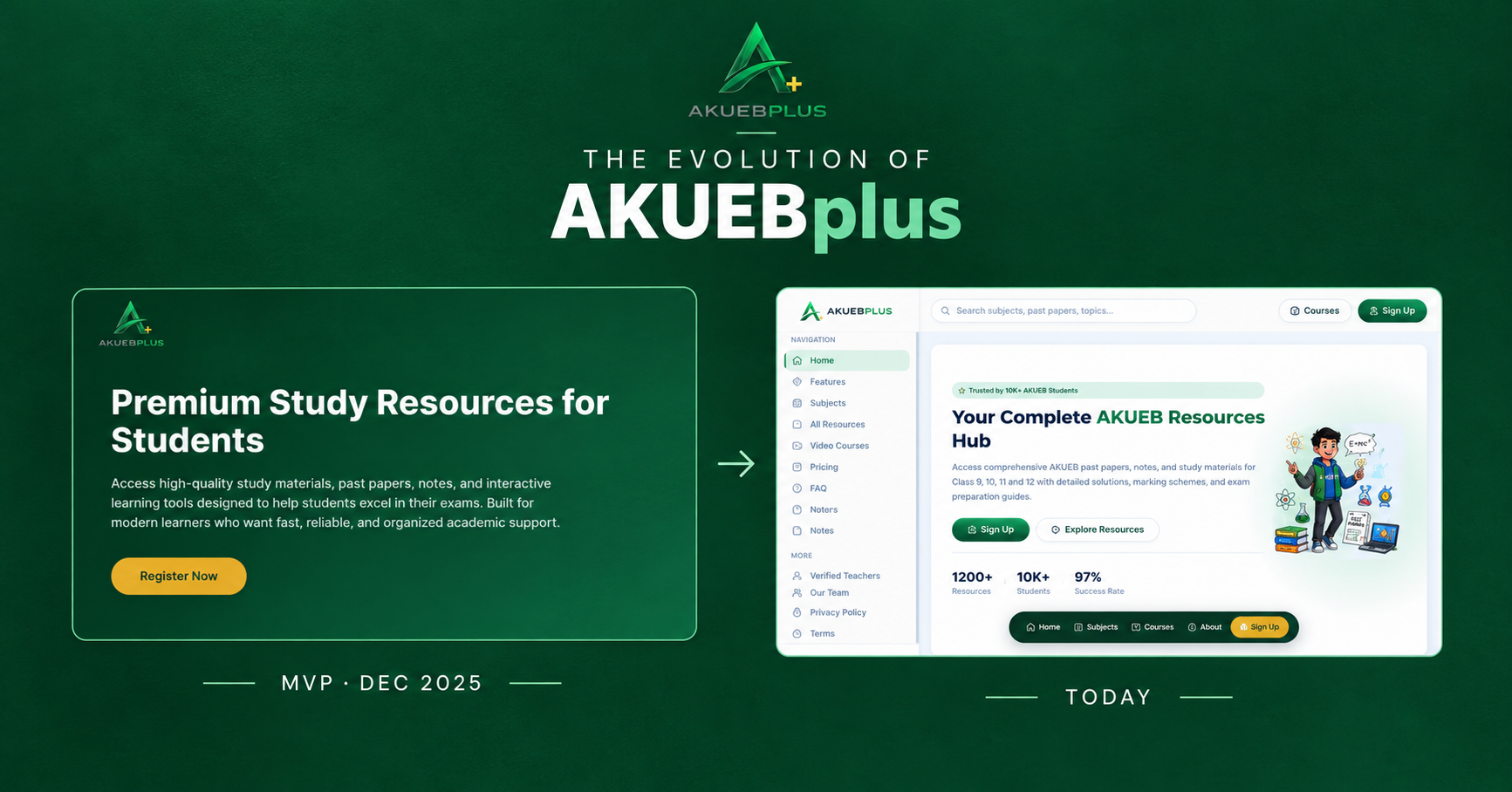
In December 2025, we put the first version of AKUEBplus online. It wasn't a big launch. We had a website, some study resources, and a problem we thought other students would understand.
They did. Students started using the site almost immediately. What began as a project for people around us gradually grew into a platform that, by October 2026, had reached 11,000 students according to our internal tracking.
I'm one of the three people behind it. This is the story of how we got started, what we built, what turned out to be harder than expected, and what I've learned from working on something that people actually use.
The problem we knew firsthand
We were preparing for AKU-EB board exams ourselves. Finding useful study material wasn't always straightforward. Notes, past papers, and other resources were scattered around, and getting everything organised took time we could have spent studying.
We knew the problem because we were dealing with it. We also knew our classmates were dealing with it.
Instead of waiting for a better solution to appear, we decided to try building one. The idea was straightforward: create a place where AKU-EB students could find the resources they needed without having to search all over the internet.
We weren't trying to build the biggest education platform from day one. We wanted to make something useful for students like us and see whether they would actually use it.
Three people, different responsibilities
There are three of us: Mohammad Rameez, Hussain Hadi, and me. We were classmates, and we approached the project from different sides.
Rameez had already worked on a similar website. That experience helped give the idea somewhere to start. From there, the three of us discussed what AKUEBplus should become and planned the project together.
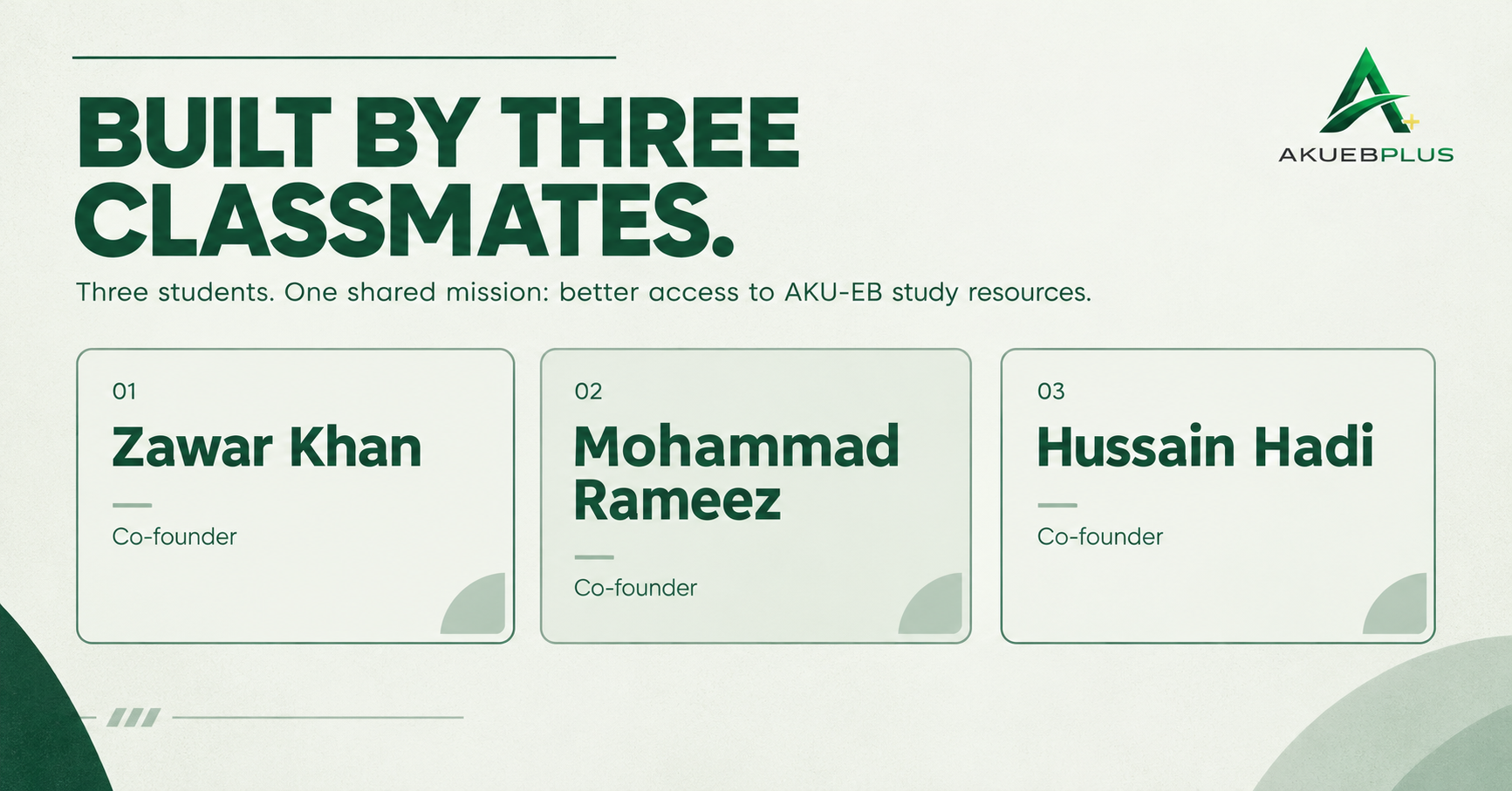
Rameez and I worked on the website, from the backend to the pages students interact with. Hussain handled the educational resources: notes, past papers, and the material that gives the platform its purpose.
That division mattered. A study platform needs more than working code, just as a collection of good resources needs a usable way to access them. Both sides had to come together.
Getting the first version online
We started building in November 2025. For the first version, we kept the scope small: notes and past papers.
Around a month later, on 8 December 2025, the MVP went live. It wasn't the full platform we imagined eventually building. It was the first version we could put in front of actual users.
And people started using it.
We saw hundreds of users arrive soon after launch. That early response was encouraging because it gave us something more useful than our own assumptions: evidence that people were looking for what we had built.
It also changed how we thought about the next steps. We no longer had to guess whether the idea was useful. We could focus on making the site more useful for the people already visiting it.
Looking back, keeping that first version focused was one of our better decisions. We got something online, learned from the response, and had a reason to keep improving it.
Turning a small site into a platform
Notes and past papers were only the beginning. As we continued working on AKUEBplus, we added practicals, model papers, listening materials, answer keys, e-marking resources, and more.
We launched the fuller product in February 2026. By then, the goal was no longer simply to put a few resources online. It was to make exam preparation easier by bringing more of the material students needed into one place.
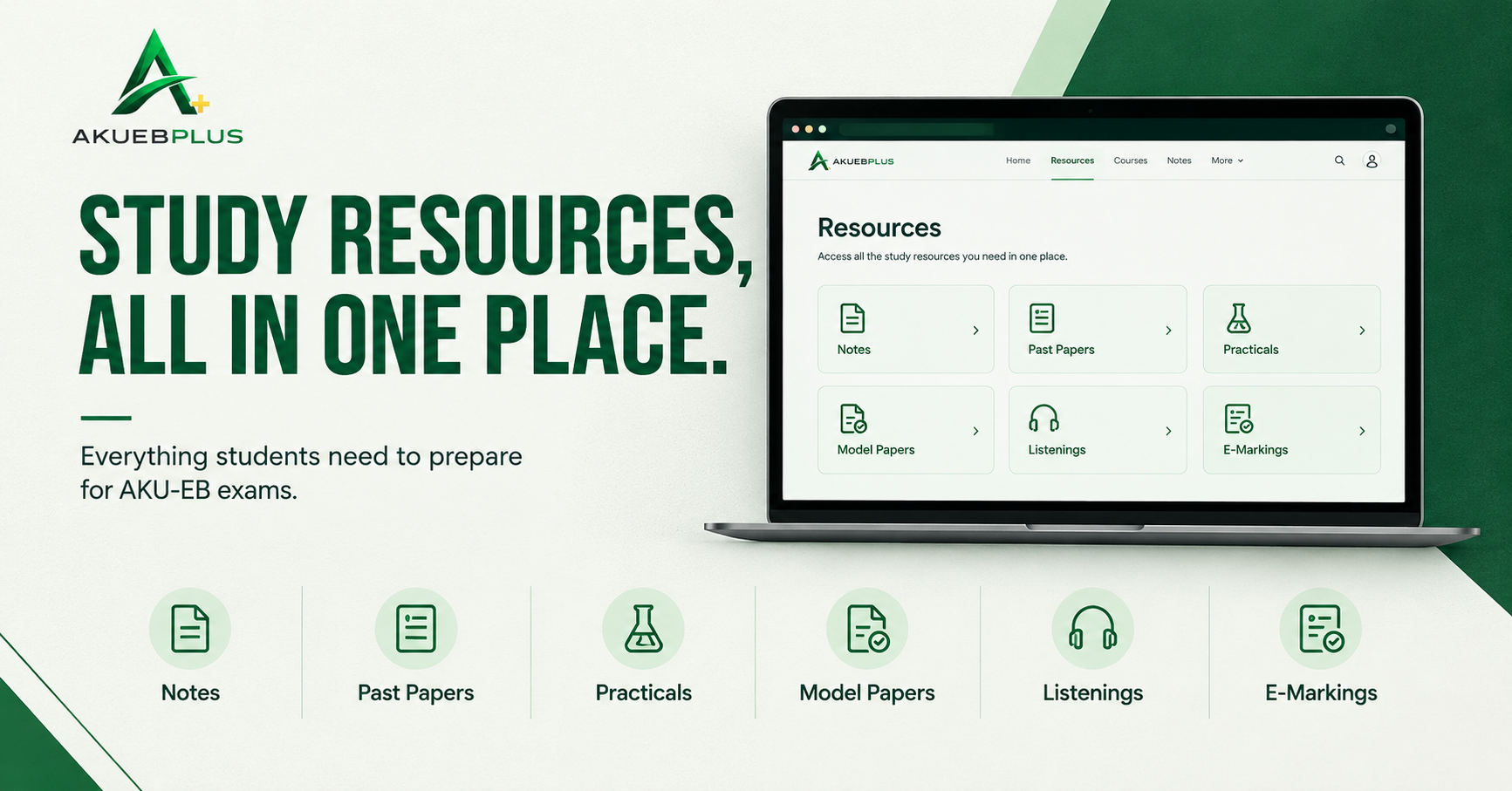
The work wasn't just about adding more categories. Resources needed to be organised, checked, and made easy to find. Hussain and I worked on notes and practicals, and teachers verified those materials. We also gathered past papers, listening resources, and e-marking material.
There's a lot of work behind a page that looks simple to use. Every resource that appears on the site has to get there somehow, and keeping a growing library organised takes consistent effort.
On the technical side, we kept our stack relatively simple: HTML, CSS, and JavaScript for the website, with Firebase handling account-related data. We didn't need an elaborate architecture to get the product working. We needed a setup we could build with, maintain, and keep improving.
The site is still a work in progress. We continue to update it as we find things to improve and resources to add.
What brought students to the site
Two of our main sources of visitors were Google Search and our own Instagram accounts. Classmates were among the first people to use the site, which made the early response especially meaningful to us.
Some students thanked us directly. Others told us that AKUEBplus had helped them during exam preparation. Those messages gave us a clearer sense of what the project meant to people outside our small team.
Growth wasn't constant throughout the year. April through June 2026 was our busiest period, when we saw roughly 400–500 students arriving per day. That lined up with exam season, when demand for past papers and revision material naturally increases.
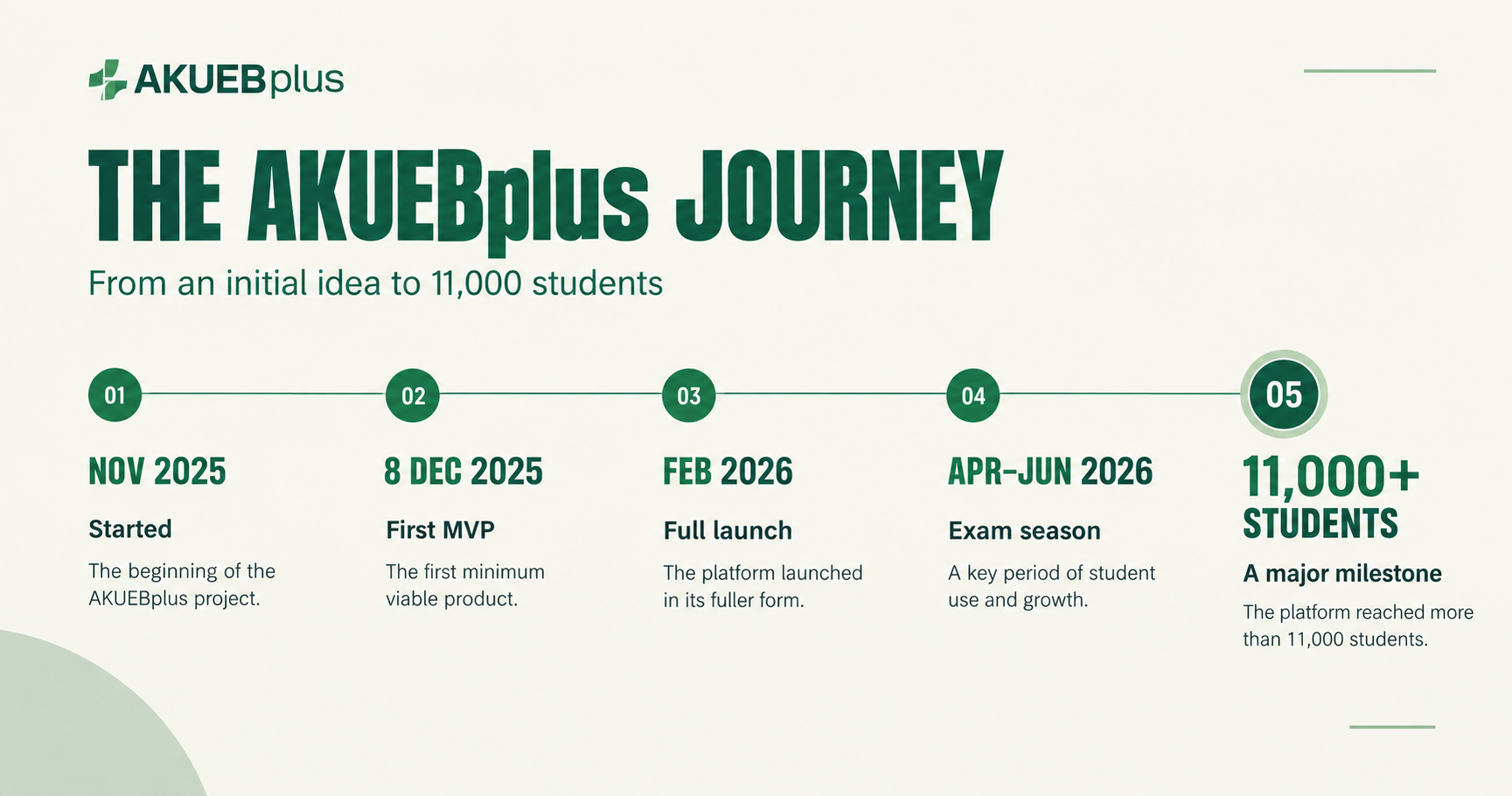
By October 2026, our tracking showed that AKUEBplus had reached 11,000 students. For us, that was a meaningful milestone for a project that started with a problem we were trying to solve for ourselves.
One clarification about that number: we use our own tracking definition for the milestone, based on unique visitors who returned at least twice. It isn't a count of verified enrolments, and it shouldn't be read as one. I prefer to explain what the number represents rather than leave people guessing.
The part that makes it worthwhile
Numbers tell us that people are visiting. Feedback gives us a better idea of what those visits mean to them.
Students have left reviews on Google describing their experience with the platform. A few examples:
“As an AKU-EB student the notes and the information on this site helped me a lot.”
— Google review
“The website is easy to use and the materials are reliable and well-organized.”
— Google review
“AKU EB Plus is a great learning platform with helpful study materials and an easy-to-use interface.”
— Google review
“It’s the best website I ever found providing akueb exam preparation resources and tools.”
— Google review
We started because we wanted better resources for ourselves. Reading that the platform has helped other students is a reminder of why we put the work into it in the first place.
What I learned from building it
Building AKUEBplus has taught me things that I wouldn't have learned from writing code alone. A few stand out.
1. Start with a problem you understand
We didn't have to invent a problem or guess who might need the solution. We were the students looking for better resources. That made it easier to decide what the first version should include and who we were building it for.
2. Get something working before adding everything
Our first version had notes and past papers. We could have spent much longer planning a bigger product, but launching gave us real users and a clearer idea of what to improve.
3. The work doesn't end when the code works
Adding content, organising resources, checking material, fixing issues, and maintaining accounts are all part of running a useful platform. Not all of that work is exciting, but the product depends on it.
4. A team needs more than developers
The website and its resources are equally important. Dividing responsibilities helped us work on different parts of the project without losing sight of what we were trying to achieve together.
5. Listen to the people using your product
Early usage helped us see that the idea had potential. Student feedback helped us understand why the site mattered. Both are useful, and neither means the work is finished.
6. Keep showing up after launch
Publishing a website is one milestone. Improving it over the following months is another. AKUEBplus has changed considerably since December, and there is still more we want to do.
7. Be clear about what your numbers mean
Growth figures are useful, but they need context. I want to be able to explain how we measure progress and what those measurements actually tell us. That matters more than making a milestone sound bigger than it is.
We're not finished yet
There's still plenty we want to improve about AKUEBplus. We want to keep expanding the resource library, make the platform more useful for students, and explore bringing the same approach to other educational boards.
We've come a long way from the first version, but reaching 11,000 students isn't the end goal. The more important question is whether we can keep making something that students find useful.
If you're studying under AKU-EB, you can explore the platform at akuebplus.com.
And if you're building something of your own, I'd be interested to hear about it. You can get in touch.
Thanks for reading.